

Loitering detection
Detect people standing idle in a work area longer than a set time — a signal of avoiding work or a stoppage, before it dents productivity.
Idle standing caught before it dents productivity
The "Idle standing" scenario flags a person who stays inactive in a work area for too long — standing idle instead of performing tasks. Prolonged inactivity is often a sign of avoiding work, but it can also point to a machine stoppage, a missing part, or a situation that needs a supervisor's attention.
Automatic detection lets you react the moment idle time crosses a set threshold — instead of reconstructing the shift from footage afterwards.
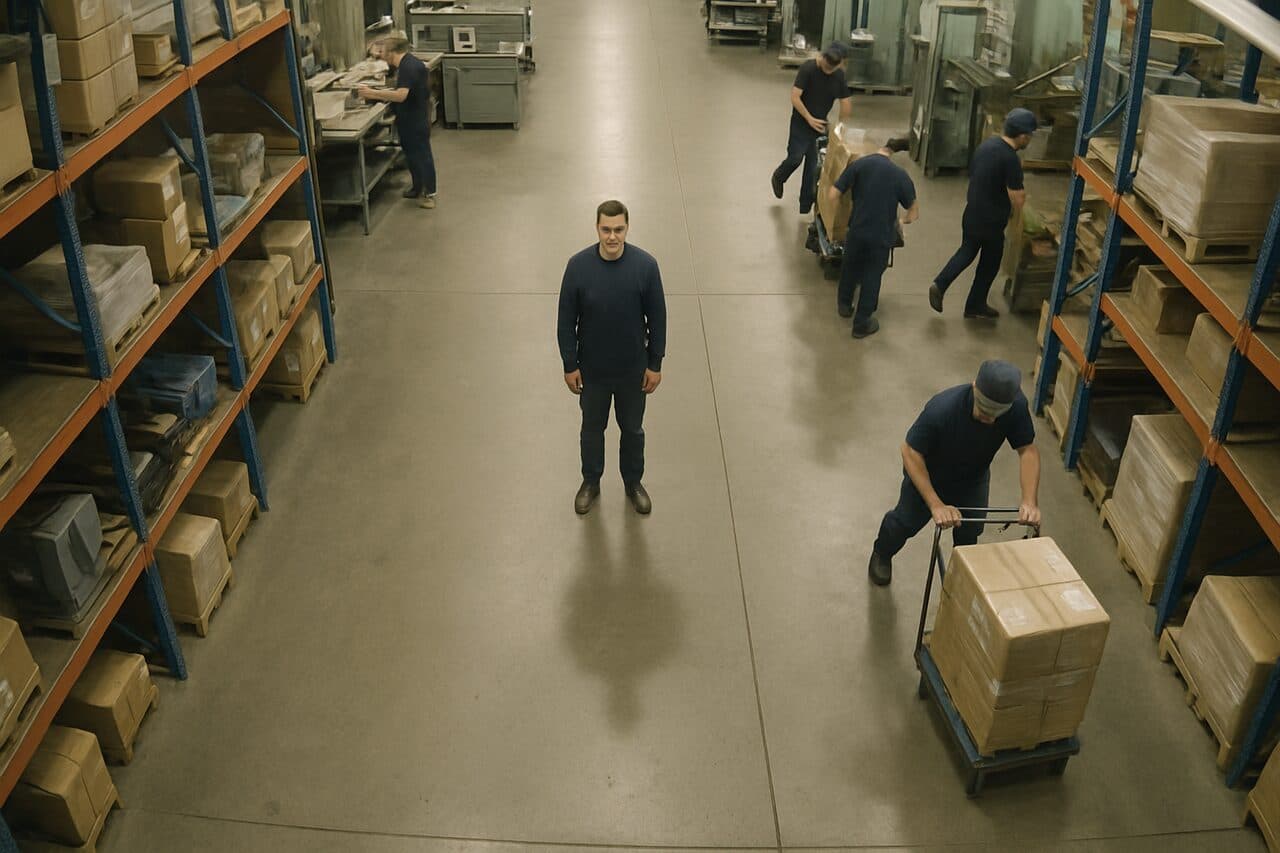
Reaction once the threshold is crossed
A detection raises an alert and an andon signal the instant a person's idle time in the zone exceeds the set threshold.
Configurable zones and time
You define both the area and the time threshold — detection runs only where idleness truly matters for the work.
A signal for supervisors
The event draws the attention of a team leader or shift supervisor before idleness affects the result.
How idle-standing detection works
Industrial cameras watch the work area while vision servers run the SAM3 detection model with the prompt "person standing idle for too long" at the edge. Once idle time crosses the threshold, the match becomes an event that integration gateways forward to AndonCloud and machine PLCs.
The event turns into an alert, an andon signal, a dashboard entry and a line in a report — with no footage sent to the cloud and no strain on your infrastructure.

Detection at the edge
The model runs locally on the vision server — low latency and no footage streamed off-site.
Andon & PLC integration
A detected event can trigger a light signal, a supervisor notification or an action on a machine controller.
No footage in the cloud
Analysis happens at the edge — only events leave the site, not the video stream.
Example use and privacy
On an assembly line or at a workstation the camera spots a person standing idle for too long — whether from avoiding work, a stoppage, or a missing part — and immediately draws the team leader's attention, while the event lands in a report with its time and zone.
The system recognises a state and an event — the fact of excessive idle time — not the identity of the person; it performs no biometric identification or face recognition.
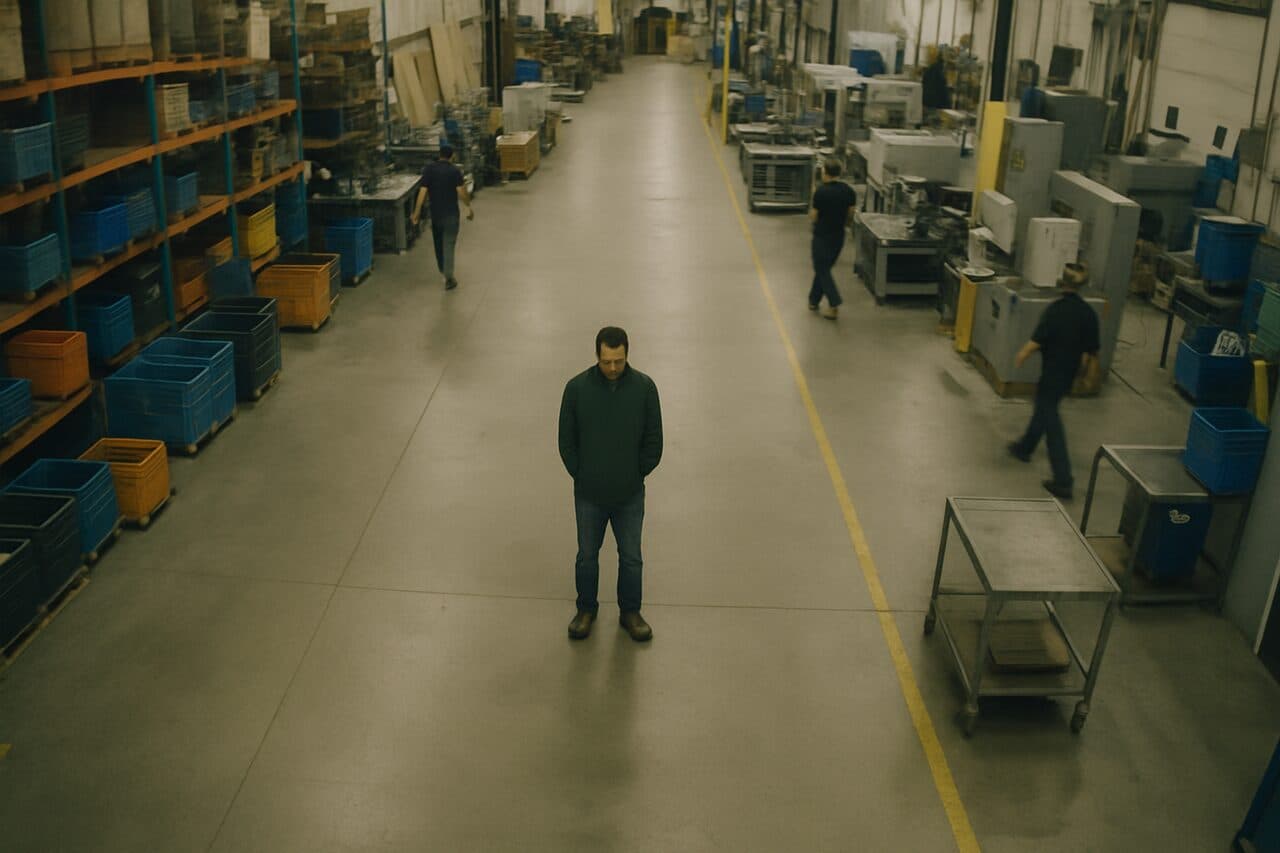
No personal identification
Detection is about a state and an event, not personal data — no face recognition.
A full event trail
Every detection is logged with time and zone, ready for analysis of downtime and workload.
Productivity support
Idle-time data helps tell avoiding work apart from genuine stoppages and cuts wasted time.
System
Our system is intuitive, but you can always count on us
We help your team work more efficiently every day.
Documentation
Customer support
Integrations
FAQ
Frequently asked questions
- A person who stays inactive in a work area longer than a set time — standing instead of working. It is a sign of avoiding work or a stoppage. The system recognises a state and an event — the fact of inactivity — not the person's identity.
- No. Detection is about a state and an event — there is no biometric identification or face recognition.
- Yes. Both the zone area and the time threshold are configured for the specific location, so the system reacts only where and when it matters.
- The event triggers an alert, an andon signal, a dashboard entry and a report line; it can also draw a supervisor's attention or trigger an action on a machine controller.
- It is an operational tool. It shows the fact of excessive idle time in a zone — helping to tell avoiding work apart from genuine stoppages (missing parts, breakdowns) and to cut wasted time, without identifying specific individuals.
- Yes. The model runs at the edge on the vision server, so the reaction happens the moment the idle-time threshold is crossed.
- Standard industrial IP cameras watching the zone; the image is analysed locally by the vision server.
- Yes. Integration gateways link events to AndonCloud and PLC controllers — for example a light signal or a supervisor notification.
The “Idle standing” scenario flags a person who stays inactive in a work area longer than a set time (for example over 60 seconds) — standing instead of performing tasks. Prolonged inactivity is often a sign of avoiding work, but it can also point to a machine stoppage, a missing part, or a situation that needs a supervisor's attention.
In the AndonCloud platform, industrial cameras watch the work area while vision servers run the SAM3 model with the prompt “person standing idle for too long”. Once idle time crosses the threshold, the integration gateway turns the detection into an event: an andon signal, an alert for supervisors, and an entry in dashboards and reports. Both the time threshold and the zone are configured for the specific location.
For example, on an assembly line or at a workstation the system draws a team leader's attention to someone standing idle for too long before it affects the result. Idle-time data helps tell avoiding work apart from genuine stoppages. It detects only a state and an event — the fact of excessive idle time — not a person's identity, and performs no biometric identification.
Contact
Contact us
If you have any questions, talk to our expert
We will respond within the next business day
sales@andoncloud.comPhone
Monday - Friday; 9:00 - 17:00
+48 71 340 70 15
Marcin Wierzbicki
During the meeting, we will present the product and help you configure the system in your company efficiently and quickly. Our team is at your disposal.
Newsletter
Sign up for the newsletter
Want to stay up to date? Sign up for our database.
By subscribing to our newsletter, you agree to our Privacy Policy and to receive updates from our company.